
What a Site Arborist Does on Construction Projects
Table of Contents
ToggleWhen trees and development meet, things can get complicated. That’s where a site arborist comes in. Whether you’re planning a residential extension or a large-scale commercial build, the involvement of a qualified arborist can make the difference between a compliant, efficient project and one burdened by fines, delays, or avoidable damage.
In New South Wales, particularly in Sydney, site arborists play a crucial role in assisting builders and developers in navigating tree-related requirements throughout the construction process. This often begins with preparing arborist reports for construction projects, which help ensure development plans meet local council regulations and safeguard existing trees from unnecessary harm.
The Site Arborist’s Role in Construction
A site arborist is not just someone who understands trees. Their job involves interpreting planning conditions, assessing the impact of construction on surrounding vegetation, and ensuring protective measures are in place to meet council regulations. They act as a specialist consultant throughout different phases of a build. From the early stages of planning to post-construction sign-off, their role is focused on balancing the goals of development with tree preservation, health, and safety.
Early Involvement: Site Assessment and Planning Input
Most projects involving tree protection begin with an initial site assessment. Here, the arborist visits the site to inspect existing vegetation, assess species, health, and structural stability, and provide insight on how proposed works might affect the trees. This process typically leads to the preparation of a formal arborist report a crucial document for development applications (DAs).
In areas like Sydney where tree protection overlays are common, these reports often identify:
- Which trees can be retained or may require removal
- Where root protection zones should be established
- What tree protection measures will be needed during construction
Supporting DA Submissions and Council Requirements
Many councils in NSW require an arboricultural impact assessment (AIA) as part of a DA submission. Site arborists produce these detailed reports, which assess how proposed construction works could affect retained trees and outline mitigation strategies. They also prepare supporting documents like tree protection plans and pruning specifications, and may recommend engineering adjustments to reduce impacts. This technical input supports the approval process and demonstrates to council authorities that tree-related risks are being responsibly managed.
Liaising with Builders, Site Managers, and Contractors
During the construction phase, a site arborist’s job becomes more hands-on. They often attend pre-start meetings or site inductions to explain tree protection requirements to contractors. Even the best-laid plans won’t work if the people on site aren’t aware of them.
Common activities during this phase include:
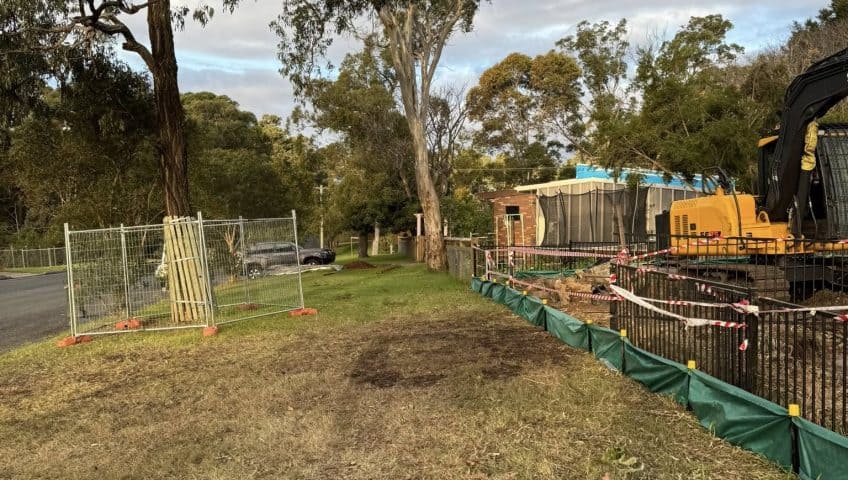
- Marking Tree Protection Zones (TPZs)
- Inspecting fencing, signage, and restricted access points
- Supervising sensitive works near tree roots or canopies
- Assessing and reporting accidental damage on-site
Without this collaboration, DA conditions can be unknowingly breached.
Monitoring and Enforcing Tree Protection Measures
Regular site visits are typically scheduled during key phases of a build. The arborist checks that tree protection measures remain in place and functional. Fencing might be moved, machinery might encroach into TPZs, or subcontractors may misunderstand boundaries. Arborists provide ongoing oversight, offer timely solutions, and document compliance. These records often form part of the final sign-off to council, confirming that tree conditions of consent were met.
Typical Challenges Faced on Building Sites
Construction is dynamic, and trees don’t always fit neatly into the plan. A site arborist helps manage this tension. Roots may be exposed during excavation and need careful pruning. Canopies can interfere with scaffold placement or material staging. Soil compaction, water runoff, or accidental pruning can impact long-term tree health. Rather than causing delays, a good site arborist resolves these issues efficiently and in line with council expectations.
Advising on Design Modifications and Tree Retention Decisions
Sometimes, even late in the design phase, the presence of trees forces changes. The site arborist may be asked to assess alternative designs to reduce tree impact or justify why a particular tree cannot be retained. This can involve:
- Adjusting building setbacks
- Altering driveway alignments
- Relocating footings to avoid major roots
Their role often extends into collaborative problem-solving, helping builders find solutions that protect both trees and timelines.
Legal Risks of Non-Compliance and How Arborists Help Avoid Them
The consequences of breaching tree protection laws in NSW can be serious. Penalties include fines, stop-work orders, or prosecution. Councils have increased enforcement in recent years, particularly in urban areas like Sydney. Site arborists help clients avoid these risks by ensuring all works stay within DA conditions, recording incidents clearly, and advising on mitigation strategies if unexpected damage occurs.
Post-Construction Checks and Final Reporting
After construction, councils may require a final compliance report. The site arborist revisits the property to inspect trees, verify protection measures were upheld, and identify any damage. They may recommend follow-up pruning, soil remediation, or ongoing tree health monitoring. In cases where trees were approved for removal, replacement planting may also be required. This final visit ensures tree-related conditions are fully addressed.
Why You Need an AQF Level 5 Arborist
In NSW, councils typically require that all tree-related reports and site supervision be carried out by an AQF Level 5 arborist. This qualification reflects a high standard of technical knowledge and experience. Engaging someone without this qualification or worse, relying on a builder to manage trees can lead to non-compliance, rejected DAs, or enforcement action. A qualified consulting arborist also understands local council policies across different LGAs, which helps streamline approval and inspection processes.
When to Engage a Site Arborist
You may need a site arborist if your project involves:
- Building near protected or significant trees
- Submitting a DA that triggers vegetation controls
- Working on land with tree preservation overlays
- Subdivision, knockdown-rebuilds, or major renovations
Early engagement allows for better design coordination and reduces the risk of expensive redesigns or DA rejections later.
FAQ’s
Q1: What’s the difference between a site arborist and a consulting arborist?
A1: The terms are often used interchangeably, but a consulting arborist typically prepares reports and assessments for planning and compliance, while a site arborist focuses on implementation and monitoring during construction. In practice, one arborist often performs both roles.
Q2: Do all councils in NSW require a site arborist?
A2: Not all, but many do especially in Sydney and urban LGAs. If your DA includes conditions related to tree protection or management, a site arborist is usually required.
Q3: Can my builder handle tree protection without an arborist?
A3: No. While builders can install fencing or follow instructions, only a qualified arborist can assess tree health, supervise sensitive works, and certify compliance to council standards.
Q4: What qualifications should I look for?
A4: Look for an AQF Level 5 arborist with experience in development projects. Membership with the Institute of Australian Consulting Arboriculturists (IACA) or similar bodies can also indicate professionalism.
Q5: How do I know if my project needs an arborist report?
A5: If your works are near trees or involve clearing vegetation, check with your local council or planner. Many DAs will specify whether an arborist report is required as part of the submission.